


Values education: trust
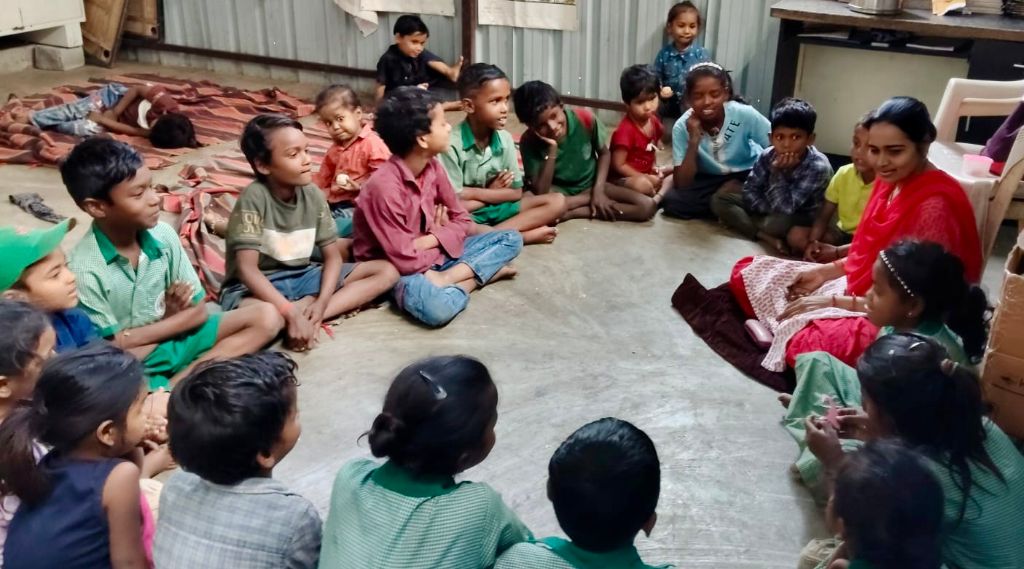
Values education is an essential part of the work we do at our Day Centers for migrant children. In a series of sessions, we address concepts that many children do not usually encounter in their immediate family or social circle, but which we consider fundamental to a well-rounded education, both on a human and practical level.
In one of the most recent sessions, we explored the value of trust. We discussed its meaning with the children: the feeling of certainty, faith in a person, in a situation, or even in life itself; the ability to hold on to the belief that something good can happen, even when there are no clear signs of it in the present. We shared simple and relatable examples, such as trusting that effort and perseverance in our studies can lead to better academic performance or trusting the people and institutions that guide and support us on our journey.
At the same time and considering the family and social conditions of many of the children we care for, we consider it essential to introduce a conscious and protective view of trust. Learning to trust does not mean doing so indiscriminately. Therefore, we also work on the idea that not everyone is trustworthy, especially if they are strangers or people who have caused harm in the past. In these cases, it is essential to learn to proceed with caution, identify warning signs, and know who to turn to when one feels unsafe.
We understand education as a shared process, so this work is not limited to childhood alone. We also offer values education sessions for parents, with the aim of reinforcing a common foundation within the family unit. In this way, we aspire for the family to become a space of stability, care, and support, where values are not only taught but also experienced and passed on in everyday life.