


Makar Sankranti
India is a land where cosmic moments and their correlation with nature and individual life have been consecrated and celebrated for millennia. Every year in January, Makar Sankranti festival honors the Sun, which is, for Hindus, the manifest God who tirelessly blesses all. It coincides with the winter solstice, the transition from darkness, or the darkest night of the year, to the renewal of the hope that light will return in the continuous movement of the Sun, growing victorious in a new cycle.
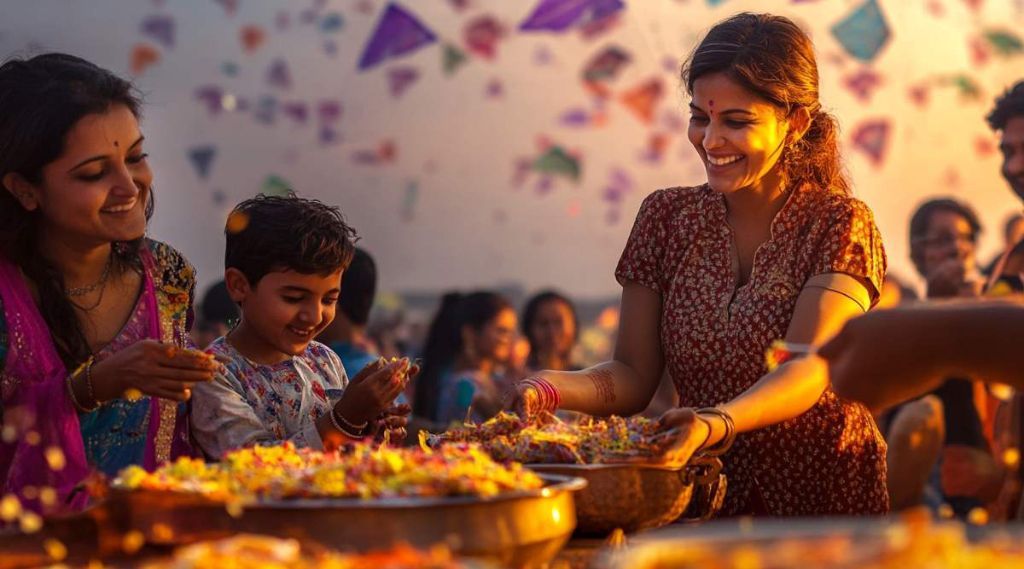
It becomes a spiritual, religious and cultural event celebrated throughout the country under different names and rituals associated with a godly day. It is considered a “Day of Donations” to charitable works, a day when the Indian spirit of solidarity materializes by giving food and clothes to the sick, the elderly, and the needy.
The act of donating a plate of khichdi is said to help purify the giver and aid their spiritual growth. Ghee is another important food donated on this day, and it is said that its properties can bring positivity to the donor's life. The festivity also marks the beginning of a period to further self-care and longevity. To this end, medical treatments, cleansing routines, and disease prevention are also recommended.
Various ceremonies and symbolic practices on this date include purifying one’s body and soul with sacred water, gathering around bonfires, eating traditional sesame-laden sweets, and flying kites.
The sweets are given to friends and family with the words “till gull gheiat uloiat”, which means “eat sesame and syrup and sweeten your words” and bring people together in peace and joy that go beyond individual differences.
Flying kites, according to some, is a way of expressing appreciation, gratitude and the desire to soar towards the Divine, to look to the sky and fly high, a moment when the Gods seem to remind their human children: “Tamaso ma Jyotir Gamaya”, “May you go higher and higher towards the Light”. Other ancient beliefs stress the importance of taking in the sun's rays as a source of health.
Every twelve years, Hindus celebrate Makar Sankranti with one of the largest pilgrimages in the world. An estimated 40 to 100 million people offer their prayers to the Sun and bathe in the tributaries of several holy rivers.
To participate in these holidays is tantamount to giving a beautiful and luminous gift to the soul.