


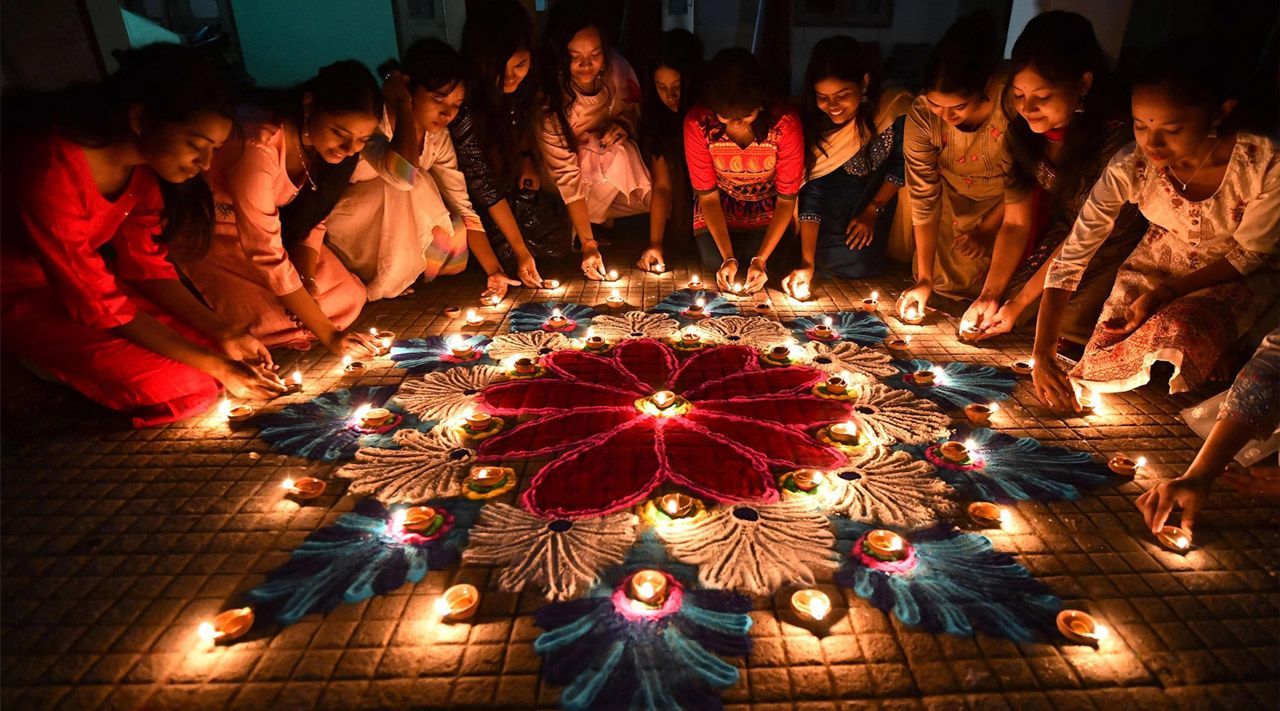
Diwali festival: Transforming light
Human beings have a natural response to certain universal calls that are expressed in all cultures through rites and celebrations. In India, one of the most emblematic and deeply meaningful festivals is Diwali, the Festival of Lights, which is part of the country's vast and diverse cultural heritage. This festival is held for five days when light, both literally and metaphorically, takes center stage.
Lights are lit in every corner, on the thresholds of homes and businesses; diyas (oil lamps) or candles burn at dusk, symbolizing victory over darkness, evil, ignorance, and everything that keeps us away from virtue. In this sense, Diwali not only marks the end of darkness, but also the rebirth of an inner light, a light that must be shared with others to multiply collective joy.
Diwali Festival coincides with the Hindu New Year and various festivities that, beyond the borders of India, also celebrate the transition from the old to the new, the passage from the ephemeral to the eternal. It is a time of profound renewal, both physical and spiritual, a new beginning that invites reflection and purification. Diwali is thus an opportunity to acknowledge the light that shines within each human being and to share it generously, creating a bond of happiness and harmony with others.
The preparation for Diwali is full of symbolism and purification rituals. During this time, it is common to wear new clothes, to renovate homes through deep cleansing and decorate them with an abundance of flowers, colorful ornaments and bright lights. In many homes, altars are erected to various Hindu deities who are given offerings of food, flowers and sacred mantras.
One of the most significant rituals of Diwali is a ritual bath, especially the one before dawn, when the stars are still twinkling in the sky. This is considered to be equivalent to a sacred bath in the Ganges River, India's most revered river, and symbolizes the purification of body and soul.
Beyond its spiritual dimension, Diwali is a moment of unity and reconciliation. This celebration does not distinguish between castes or religions, everyone is invited to participate and share. It is an opportunity to heal old wounds, to reunite those who have grown apart and to strengthen community ties. Families and friends gather to share food, exchange gifts and express good wishes. Unity in diversity is one of the deepest values of Diwali. Unity in diversity is one of the deepest values of Diwali.
India is an outstanding example of preserving its traditions, a country where celebrations such as Diwali are not only preserved but experienced with an intensity that prevents oblivion from taking over their cultural legacy. In this festival, every light that is lit is a reminder that darkness can be overcome, and that true light resides in shared unity, love and generosity.