


Optimal development in childhood
In India, many families who migrate in search of work come from backgrounds marked by economic and educational precariousness. Their ways of understanding and nurturing child development tend to rely more on intuition, tradition, or passed-down experience than on formal knowledge about developmental stages. This is not, in itself, something negative. However, when adequate tools and information are lacking, there can be areas of uncertainty in raising and supporting children.
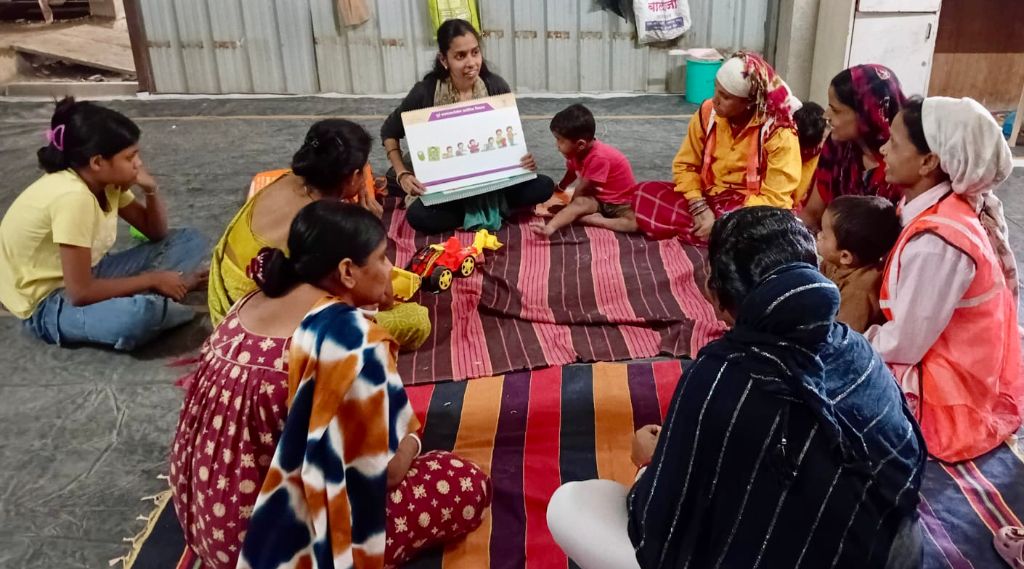
At Asha-Kiran, we explore this issue with families, with the aim of broadening their understanding of child development and promoting more conscious, close, and functional parenting practices. We believe that when parents better understand how their children grow, feel, and learn, family bonds are strengthened and a safer environment for their development is created.
After a period of work that included informational sessions focused on the development of children up to six years old, we collected testimonials from participating parents. Many of them shared significant changes in their daily lives: they said that they now play with their children more regularly, sing songs to them, tell them stories, take greater care of their hygiene, try to provide them with adequate nutrition, and strive to teach them basic values, such as the difference between right and wrong. They also emphasized that they try to avoid arguments in front of their children, aware that children learn by watching what happens in the family environment.
At the same time, they expressed the challenges they still face in managing certain behaviors without resorting to more “traditional” but less desirable methods. When faced with disobedience or conflict, some parents admit that they get angry, yell, resort to physical punishment, or, conversely, give in to their child’s demands. One mother expressed it honestly:
“If they do something wrong, I tell them not to do it. But children fight while they play, so sometimes I yell at them or swear at them, because if I don’t, they don’t listen to me.”
We know that emotions profoundly influence people’s well-being and behavior at any age. That is why promoting emotional maturity is a key element of child development. At Asha-Kiran, we support parents in recognizing their own emotions and finding constructive ways to manage them. In this way, when their children display inappropriate behaviors, they can learn to set clear and firm boundaries without resorting to violence, thus strengthening a more respectful and conscious parenting style.